Early Childhood Instruction: Constructing a Firm Foundation for Enduring Progress
Early childhood education plays a fundamental function in shaping a child's destiny. It constitutes the bedrock for essential cognitive, social, and emotional skills. Research reveals that excellent early schooling can produce superior academic results and individual maturation. However, the intricacies of efficient programs and the role of neighborhood involvement raise vital issues. Which factors truly determine a child's early learning experience? The solutions may astound many.
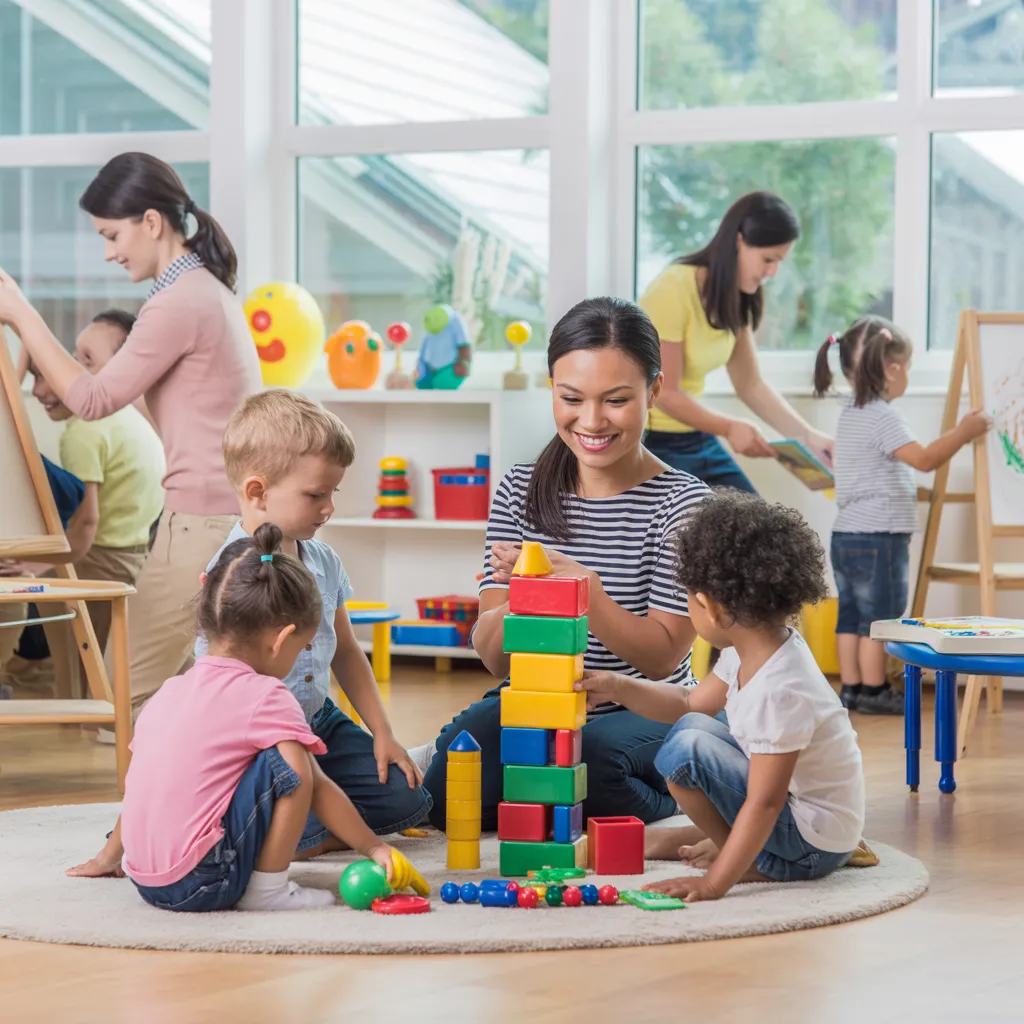
The Significance of Early Childhood Education in Development
Early childhood schooling functions as an essential role in a child's overall development, as it establishes the base for perpetual education and social skills. During these crucial stages, children are exposed to structured environments that encourage exploration and curiosity. This exposure boosts intellectual development, enabling children to create thoughts and tackle problems. In addition, early education presents children to diverse experiences, fostering creativity and critical thinking.
Early childhood education creates opportunities for connection with friends and mentors, which is important for developing effective communication abilities and emotional maturity. Children come to learn to handle social bonds, grasp social norms, and nurture empathy. In addition, taking part in group activities develops collaboration and problem-solving, important capabilities for later interactions. The value of early childhood education cannot be understated, as it not only prepares students for scholastic achievement but also furnishes them with the core competencies to excel in diverse social settings throughout their lives.
Core Competencies Cultivated in Early Childhood Contexts
Throughout initial education environments, children build important abilities that shape their coming social bonds and emotional well-being. Social engagement encourages collaboration and communication, while analytical thinking maturation inspires solving problems capacities. Additionally, emotional regulation tools support children in processing their feelings effectively, creating the base for toughness.
Social Communication Techniques
Social interaction skills flourish in early learning environments, where children interact with peers and educators in various activities. These interactions are essential for developing important communication skills, such as sharing, listening, and taking turns. Through collaborative play and group projects, children learn to articulate their thoughts and emotions clearly while also gaining empathy and understanding of diverse perspectives. Teachers facilitate these interactions by modeling suitable social behaviors and providing structured opportunities for teamwork. As children navigate friendships and resolve conflicts, they build resilience and adaptability, preparing them for future social settings. Ultimately, strong social interaction skills foster a sense of belonging and community, serving as a foundational element for lifelong interpersonal relationships.
Critical Thinking Advancement
Nurturing critical thinking skills in early learning environments plants the foundation for young learners' cognitive growth. Engaging pursuits, including problem-solving tasks and open-ended prompts, encourage learners to scrutinize information and assess various perspectives. Throughout discovery and experimental learning, children develop the ability to formulate inquiries, make predictions, and authenticate their ideas, breeding a sense of curiosity. In addition, collaborative endeavors cultivate discussion and critical processes, permitting children to communicate their concepts and interrogate their beliefs. Educators serve as a pivotal element by fostering a atmosphere that emphasizes inquiry and encourages autonomous development. By incorporating analytical reasoning into routine activities, early learning schemes outfit children to become effective decision-makers, preparing the stage for scholastic success and enduring learning.
Emotional Modulation Techniques
Many preschool and early learning centers implement emotional regulation techniques to help children work through their feelings and interactions. These techniques often feature mindfulness practices, such as deep breathing exercises, which teach children to pause and reflect before reacting. Additionally, educators advocate the use of "feelings charts," enabling children to articulate and identify their emotions in a constructive manner. Role-playing scenarios are also employed, allowing children to practice appropriate responses to various emotional situations. By fostering these skills, early learning environments promote resilience and empathy, essential for social development. Ultimately, the integration of emotional regulation techniques equips children with the tools to regulate their emotions effectively, laying a foundation for healthier relationships and improved mental well-being throughout life.
The Impact of Quality Preschool Learning on Future Success
Early learning opportunities create a firm groundwork for future achievement, influencing children's intellectual, social, and emotional growth. Research demonstrates that children who take part in high-quality preschool programs display stronger academic outcomes and higher preparedness for school. These programs encourage critical thinking skills, enhance language acquisition, and support problem-solving capabilities, all vital for lifelong education.
Furthermore, quality early education encourages relational competencies, promoting cooperation and communication among peers. Children learn to handle relationships, which strengthens mental see the full story toughness and effective conflict resolution. The benefits surpass individual achievement; communities with robust early education systems experience decreased crime levels and greater economic growth.
Investing in quality foundational learning not only provides children with fundamental skills but also creates a cascading impact that enhances societal well-being. Consequently, emphasizing early childhood education becomes crucial, ensuring that future generations are prepared to flourish in an increasingly complex world.
The Role Play Plays in Early Childhood Learning
Play is a essential component of early childhood education, serving as a vehicle for diverse types of exercises that encourage learning. Through engaging in play, children undergo cognitive development and improve their social skills, fostering vital skills for future relationships. Recognizing the role of play in early education can clarify its importance in molding well-rounded individuals.
Types Of Play Activities
Involvement in different kinds of play activities significantly improves preschool learning. These programs can be categorized into several types, each delivering distinct advantages.
Creative play provides youth the capacity to examine their imaginative capabilities and strengthen analytical thinking by representing different scenarios. Constructive activities that involve building and assembling, refines fine motor skills and spatial awareness. Gross motor development is promoted through physical activities while also encouraging social interactions, developing cooperation and verbal skills.
Games with guidelines familiarize children to ideas of justice and collaboration, helping them learn to handle social relationships. Finally, sensory play engages children through hands-on interaction, stimulating their senses and boosting cognitive connections. Each type of play activity is instrumental in creating a vibrant educational space, setting the stage for well-rounded growth in childhood learning.
Mental Advancement Via Play
Through various types of play activities, children naturally improve their cognitive development. Engaging in imaginative play, for example, allows children to investigate problem-solving skills and creativity. As they navigate various situations, they develop the ability to analyze carefully and choose wisely. Puzzles and building blocks promote analytical thinking and spatial awareness, developing numeracy abilities. Additionally, role-playing encourages linguistic growth as children express ideas and work out character parts. Sensory play, involving materials like sand or water, stimulates exploration and inquiry, deepening their understanding of the world. Each of these play forms contributes uniquely to cognitive growth, laying a foundation for educational achievement. Consequently, recreational activity serves not only as a source of joy but also as an essential vehicle for mental advancement in preschool settings.
Social Skills Development
Children naturally cultivate interpersonal abilities during collaborative play activities. Through activities such as group games and imaginative play, they learn essential skills like sharing, turn-taking, and effective communication. These interactions promote empathy, as children manage differing viewpoints and negotiate conflicts. Furthermore, play offers a safe environment for them to practice problem-solving, enhancing their ability to cooperate with peers. As they participate in shared tasks, children develop trust and build friendships, which are critical for emotional and social well-being. This foundation not only underpins immediate social interactions but also prepares them for future relationships in school and beyond. Overall, play serves as an important mechanism for enhancing social skills, establishing a strong groundwork for lifelong social competence.
Tips for Locating the Ideal Early Education Program for Your Child
Picking an ideal educational option can prove challenging for parents. Multiple aspects must be considered to ensure an perfect fit for a kid's needs. To start, guardians should review the curriculum, seeking offerings that emphasize experiential learning and growth stages. Observing classroom dynamics can provide perspective into the way educators engage with students and build a nurturing atmosphere.
In addition, the training and background of staff are critical. Programs run by qualified teachers often have a more structured approach to learning. Parents should also assess the program's facility standards and safety measures, making sure they meet health and security guidelines.
Finally, logistical aspects such as location, operating schedule, and cost should align with a family's budget and lifestyle. By carefully weighing these elements, caregivers can take well-considered steps that establish a solid groundwork for their child's learning path.
Community and Parental Engagement in Early Childhood Learning
The involvement of both the community and parents has an important role in advancing early childhood education. Joint efforts form a positive environment that encourages children's development and learning. Community organizations like libraries and health services can offer resources and programs that improve educational experiences. These partnerships often lead to increased access to educational materials and extracurricular activities, helping young learners.
Moreover, parent participation is significant; when parents engage actively in their child's learning, children display improved scholastic achievement and interpersonal abilities. This involvement can take many forms, such as participating in school activities, offering support, or interacting with teachers.

Regularly Inquired Topics and Answers
What Requirements Should Early Childhood Professionals Have?
Early childhood teachers need to obtain suitable qualifications in education or child development, certifications in first aid and CPR, and training in early childhood educational practices. Background with diverse student populations and excellent communication abilities are critical as well.
How Can I Support Education at Home?
To support at-home learning, caregivers can establish a consistent schedule, participate in interactive reading sessions, promote play-based learning, provide educational resources, and foster a positive learning environment that promotes exploration and curiosity in children.
What Represent the Manifestations of Developmental Issues?
Symptoms of developmental problems might involve communication challenges, restricted social interactions, motor difficulties, and problem-solving challenges. Parents ought to track these behaviors and reach out to professionals for assessment and guidance if worries surface.
How Do I Know if My Child Is Prepared for School?
A child could be prepared for school if they can communicate needs, obey basic directions, socialize with peers, show fundamental self-care abilities, and display interest in education. These signs indicate readiness for a school setting.
What Purpose Do Toys Serve in Foundational Education?
Toys play an vital component in childhood learning by promoting mental, social, and motor skills development. Through creative play and problem-solving, children acquire key ideas, cultivating creative thinking and preparing them for future learning experiences.